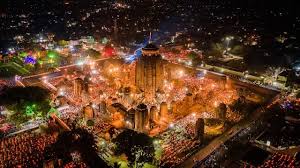
In the heart of Odisha, within the labyrinthine streets of Bhubaneswar, lies a spiritual epicenter that has withstood the passage of a millennium. Known as the “Ekamra Kshetra,” Bhubaneswar is the “City of Temples,” and its crowning jewel is the Lingaraj Temple. As Maha Shivratri approaches on Sunday, February 15, 2026, this architectural marvel of the Kalinga dynasty prepares for its most dramatic and visually arresting tradition: the hoisting of the Mahadipa.
For the people of Odisha, the “Great Night of Shiva” is incomplete until a massive, flickering lamp pierces the midnight sky from the very pinnacle of the 180-foot temple spire. It is a moment of collective breath-holding, a spiritual climax that marks the end of a day-long fast and the beginning of divine grace.
1. The Lord of Three Worlds: Why Lingaraj?
The Lingaraj Temple is unique in the Hindu world because of its deity, Harihara. The presiding deity is a combination of Lord Vishnu (Hari) and Lord Shiva (Hara). This synthesis reflects the inclusive and harmonious religious history of Odisha.
The temple, built in the 11th century by King Jayati Keshari, is a masterpiece of stone carving. Its massive courtyard contains over 50 smaller shrines, but on Maha Shivratri, every eye is fixed on the main Vimana (spire). To worship here is to acknowledge that the sustainer and the destroyer are one and the same.
2. The Mahadipa Ritual: A Feat of Faith and Bravery
The most anticipated event of the night is the Mahadipa. While most temples light lamps at the altar, Lingaraj takes this offering to the heavens.
-
The Preparation: The Mahadipa is a giant copper lamp, filled with several kilograms of ghee and a thick handmade wick. It represents the “Jyoti” (light) of Shiva that dispels the darkness of the world.
-
The Climb: In a display of incredible bravery and tradition, a designated group of temple sevayats (priests/climbers) scales the 180-foot high, intricately carved exterior of the temple. They carry the heavy lamp to the very top—the Amalaka—near the sacred Pinaka (trident).
-
The Midnight Moment: Precisely at the auspicious moment calculated by the temple astrologers (usually around midnight), the lamp is lit. As the flame flickers against the dark sky, tens of thousands of devotees in the courtyard erupt in chants of “Hari Bol” and “Jai Maheswar.”
3. The Fast and the Feast: Traditions of the Devotees
Maha Shivratri in Bhubaneswar is a test of endurance and devotion.
-
The Nirjala Upavasa: Most devotees observe a strict fast, not consuming even a drop of water until the Mahadipa is hoisted.
-
The Sacred Dip: The day begins with a holy bath in the Bindusagar Tank, located just a few hundred meters from the temple. It is believed that this tank contains water from every holy river in India.
-
Breaking the Fast: Only after the Mahadipa is seen atop the temple do families gather to break their fast with Mahaprasad—sacred food offered to the Lord, often consisting of simple, wholesome Odia vegetarian delicacies.
4. Bhubaneswar 2026: A City Bathed in Light
In 2026, the celebration at Lingaraj will be augmented by the city’s modern infrastructure and heritage preservation efforts.
-
Ekamra Project: The area surrounding the temple has been beautified with pedestrian walkways and lighting, making it easier for the millions of pilgrims to navigate the “Temple City.”
-
Bhajan Sandhya: Public squares across Bhubaneswar will host cultural programs featuring Odissi dance and Shiva-themed Bhajans, creating a city-wide festival atmosphere.
-
Night-long Vigil: The “Jagran” in Odisha is a communal affair. Families sit together in the temple precincts, reading the Shiva Purana and lighting small lamps (diyas) while waiting for the midnight flame.
5. Essential Guide for Visitors to Lingaraj 2026
-
Temple Entry: Please note that the inner sanctum of Lingaraj is open only to Hindus. However, there is a dedicated viewing platform built during the British era that allows all visitors to see the stunning architecture and the Mahadipa ritual.
-
Timings: To witness the Mahadipa, you should be in the vicinity by 9:00 PM. The crowd starts swelling early, and the atmosphere becomes electric as midnight approaches.
-
Photography: While cameras are not allowed inside the temple, the exterior view of the lamp being hoisted is a spectacular sight for photographers from the surrounding buildings or the designated viewing areas.
-
Stay: Bhubaneswar offers excellent hotels, ranging from luxury to budget. Stay near the Old Town (Ekamra Kshetra) to be within walking distance of the main festivities.
6. The Spiritual Lesson: The Inner Light
The Mahadipa is more than just a lamp on a building; it is a metaphor for the human condition. The temple spire is the human body, and the Mahadipa is the awakened soul. The ritual reminds us that to reach the pinnacle of our potential, we must endure the “climb” of discipline and fuel our lives with the “ghee” of devotion.
As the giant lamp glows over the skyline of Bhubaneswar on February 15, 2026, it serves as a beacon of hope, reminding everyone that no matter how deep the darkness, a single flame of truth can illuminate the world.