When the monsoon clouds recede from the lush green landscapes of Kerala, a gentle breeze brings the fragrance of fresh blooms, harvested paddy, and traditional spices. This signals the arrival of Onam, Kerala’s grandest, most vibrant, and culturally rich harvest festival. Transcending boundaries of caste, creed, and religion, Onam is a ten-day celebration of unity, prosperity, equality, and state pride.
In 2026, the main day of the festival—Thiruvonam—falls on Wednesday, August 26, 2026. From intricate floral carpets (Pookalam) and majestic boat races (Vallamkali) to royal banquets (Onasadya), Kerala transforms into an open-air cultural paradise.
Whether you plan to travel to God’s Own Country this August or wish to celebrate the festival in your own home, this ultimate guide covers the legend, key rituals, food traditions, and travel tips for Onam 2026.
1. The Legend of King Mahabali: Why Kerala Celebrates Onam
Unlike many Indian festivals that celebrate the victory of good over evil by slaying a demon, Onam commemorates a legendary Asura king named Mahabali (or Maveli), whose reign is remembered as Kerala’s golden era.
-
The Golden Reign: Under King Mahabali’s rule, the kingdom experienced complete prosperity, honesty, and social equality. Legend says there was no crime, poverty, or deceit in his realm (Maveli nadu vanidum kalam, manusherellarum onnu pole).
-
Vamana’s Boons: The gods, envious of Mahabali’s rising popularity, sent Lord Vamana (the fifth avatar of Lord Vishnu) disguised as a dwarf Brahmin to check his power. Vamana requested three paces of land. When Mahabali agreed, Vamana expanded into a cosmic giant, covering the earth with his first step and the heavens with his second.
-
The Cosmic Sacrifice: Having no land left for the third step, the righteous King Mahabali offered his own head. Pleased by his selfless devotion, Lord Vishnu granted him a boon: Mahabali was allowed to visit his beloved subjects once every year.
-
The Annual Homecoming: Onam marks the sacred annual return of King Mahabali to check on the happiness of his people. Kerala dresses in its finest attire to show their legendary king that they remain joyful and prosperous.
2. The 10 Days of Onam: From Atham to Thiruvonam
The festivities span ten days, starting on Atham star in the Malayalam month of Chingam and reaching their climax on Thiruvonam.
Day 1: Atham (Aug 17, 2026) ➔ Start of Pookalam (Single ring of yellow flowers)
Day 2 – 9: Chithira to Uthradam ➔ Pookalam grows larger daily, Boat Races & Shopping
Day 10: Thiruvonam (Aug 26, 2026) ➔ Grand Homecoming, Onasadya Feast & Cultural Dances
3. Iconic Cultural Traditions of Onam
1. Pookalam (The Floral Carpet)
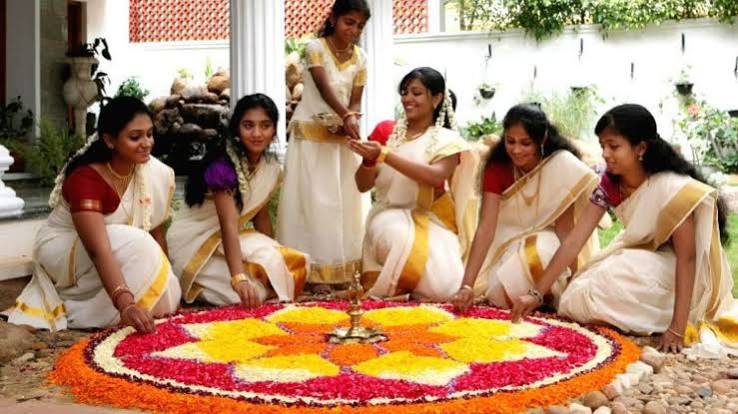
Starting on Atham day, households construct elaborate floral patterns at their front entrances. The carpet begins small with simple yellow flowers (Thumba) and grows in size, layering new colors and intricate geometric patterns over the ten days until it becomes a massive masterpiece on Thiruvonam day.
2. Onasadya (The Royal Feast)
No Onam celebration is complete without Onasadya, an elaborate multi-course vegetarian banquet served on a fresh plantain leaf. It represents the agricultural abundance of the harvest season and typically consists of 24 to 28 traditional dishes eaten using one’s fingers.
3. Vallamkali (The Snake Boat Races)
The calm backwaters of Kerala turn into thrilling racing arenas. Hundreds of rowers sit in massive, narrow canoes shaped like hooded cobras (Chundan Vallam), paddling in perfect unison to rhythmic boat songs (Vanchipattu). The Nehru Trophy Boat Race in Alappuzha and the Aranmula Uthrattathi Boat Race are world-famous spectacles held during this season.
4. Pulikali (The Tiger Dance)
On the fourth day after Thiruvonam, the streets of Thrissur fill with hundreds of performers painted as tigers and leopards. Dancing to the heavy beat of traditional drums (Udukku and Thakil), the Pulikali procession is a thrilling folk tradition dating back over two centuries.
4. What to Wear: Traditional Onam Attire
During Onam, Kerala embraces its traditional white and gold aesthetic:
-
For Women: The Kasavu Saree or Set Mundu—a elegant off-white cotton drape featuring a rich gold zari border.
-
For Men: The Mundu—a handwoven white cotton lower garment trimmed with gold thread, paired with a white shirt or traditional silk Kurta.
5. Travel Guide for Onam 2026 in Kerala
Planning a trip to Kerala in late August 2026 offers an authentic look into local heritage.
-
Top Destinations:
-
Trivandrum: The capital city lights up with week-long state-sponsored cultural illuminations, music concerts, and food fairs.
-
Thrissur: The best hub to witness grand Pookalam competitions, temple pageants, and the wild Pulikali tiger dances.
-
Alappuzha (Alleppey): The premier spot to experience backwater boat races and stay on houseboats.
-
-
Travel Tips:
-
Book Ahead: Hotel rooms, backwater cruises, and intercity transport fill up rapidly during August. Secure reservations months in advance.
-
Monsoon Gear: Late August falls during the tail end of the Southwest Monsoon in Kerala. Carry quick-drying clothing and umbrellas.
-
Reserve Sadya Seats: Major traditional restaurants require advance tokens for their Onasadya banquet on Thiruvonam day.
-
Conclusion: A Celebration of Universal Harmony
The Onam festival is far more than an agricultural milestone; it is an enduring message of hope, generosity, and social harmony. As the people of Kerala lay out colorful floral carpets to welcome their beloved King Mahabali on August 26, 2026, they remind the world of a beautiful ideal: a society built on prosperity, truth, and equal joy for every human being.