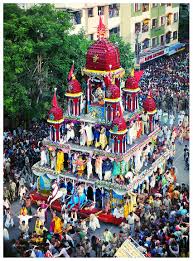
While the coastal town of Puri in Odisha draws global attention for its colossal chariot festival, a quiet pocket in West Bengal’s Hooghly district holds the mantle for a celebration that is arguably more intimate, deeply historical, and structurally massive. The Mahesh Rath Yatra in Serampore is the second oldest Rath Yatra in India, celebrated continuously since 1396.
Unlike many historical festivals that faded with time, the legacy at Mahesh has only grown. On Sunday, July 16, 2026, millions of devotees, history buffs, and cultural travelers will gather along the banks of the Hooghly River to pull a historic iron chariot that has rolled through the centuries. Whether you are a local seeking spiritual blessings or a global traveler uncovering India’s hidden heritage, this guide explores the history, unique rituals, and essential travel tips for the Mahesh Rath Yatra 2026.
1. The History: A Legacy Since 1396
The origins of the Mahesh Rath Yatra trace back to the 14th century, making it over 600 years old. The festival is intrinsically tied to a Bengali saint named Drubananda Brahmachari.
-
The Legend: Drubananda, a devout follower of Lord Jagannath, once made a pilgrimage to Puri. However, the temple priests barred him from offering bhog to the deity. Heartbroken, Drubananda returned to Bengal and fasted until death on the banks of the Ganges in Mahesh. Lord Jagannath, moved by his devotion, appeared in his dream and whispered that he would manifest locally.
-
The Divine Discovery: Shortly after, a massive neem trunk floated down the Hooghly River. From this wood, Drubananda carved the idols of Lord Jagannath, Balarama, and Subhadra, establishing the Mahesh Temple.
-
The Sri Chaitanya Connection: Centuries later, the great Bhakti saint Sri Chaitanya Mahaprabhu visited Mahesh on his way to Puri. Enchanted by the spiritual atmosphere, he declared Mahesh to be the “Naba Nilachal” (The New Puri).
2. The Chariot: A Masterpiece of Iron and Wood
The chariot pulled at Mahesh today is a historical and architectural marvel in its own right. It is not constructed fresh every year like the wooden chariots of Puri; instead, it is a permanent structure.
-
The Martin Burn Legacy: The current chariot was built in 1885 with financial assistance from Krishnachandra Bhowmick and the famous British-Indian engineering firm, Martin Burn.
-
The Specifications: Standing at an imposing 50 feet tall, this four-story structure is made entirely of an iron framework wrapped in wood. It weighs nearly 125 tons, rests on 12 massive iron wheels, and features nine spires (Navaratna style) decorated with intricate brass statues of avatars and deities.
3. Unique Rituals of the Mahesh Rath Yatra
The Snana Yatra (The Bathing Festival)
Weeks before the actual procession, the idols are brought out for a public holy bath on Snana Purnima. They are drenched in hundreds of liters of Ganges water mixed with milk and saffron. According to tradition, the deities fall ill with a high fever post-bath and are kept in isolation (Anasara), treated with secret herbal concoctions until the day of the Rath Yatra.
The Journey to Gundicha (Kunjabati)
On the day of the Rath Yatra, the reimagined idols are placed on the iron giant. Devotees grab four massive coir ropes to pull the chariot from the Mahesh Temple to the Gundicha Temple (locally known as Mashi Mar Bari or Kunjabati), located a kilometer away.
The Month-Long Mela
While Puri’s festival ends in about nine days, Mahesh plays host to a month-long fair (Maheshir Mela). The streets of Serampore light up with stalls selling traditional wooden toys, clay pots, handicrafts, and local snacks.
4. Culinary Traditions: The Taste of the Fair
Attending the Mahesh Rath Yatra is as much a culinary journey as it is spiritual.
-
Maheshir Jilipi (Jalebi): The fair is legendary for its massive, crispy Jalebis made freshly in giant cauldrons. Pairing hot Jalebis with crunchy, fried Papad is a mandatory ritual for visitors.
-
Malpua: Hereditary sweet-makers set up stalls around the temple to sell syrup-soaked Malpuas, an offering beloved by Lord Jagannath.
5. Travel Guide for Mahesh Rath Yatra 2026
As the festival approaches in July 2026, navigating the crowds requires smart planning.
Safety & Photography Tips:
-
The Iron Giant Danger: Because the chariot is made of 125 tons of iron, it takes a long time to stop once it gains momentum. Always stay clear of the path of the wheels and maintain a safe distance from the ropes.
-
Monsoon Gear: July is peak monsoon season in West Bengal. Carry sturdy umbrellas, waterproof bags for cameras/phones, and wear anti-slip footwear.
-
Best Vantage Point: If you are a photographer looking for the perfect shot of the nine-spired chariot moving through the crowds, try to secure a spot on a balcony of the houses lining the GT Road early in the afternoon.
6. Why Mahesh Holds a Special Place in Bengali Hearts
Mahesh is a living museum of Bengal’s socio-religious history. It successfully bridges the gap between the grand, royal style of Odisha’s Jagannath culture and the deeply emotional Gauriya Vaishnavism of Bengal. It was even mentioned by legendary literary icon Bankim Chandra Chattopadhyay in his famous 1877 novel Radharani, cementing its place in Bengal’s cultural psyche.
Conclusion: Pulling the Ropes of History
The Mahesh Rath Yatra 2026 is not just a religious event; it is an encounter with 630 years of unbroken human devotion. As the structural colossus moves through the historic streets of Serampore this July, it carries the prayers of generations. Pulling its rope is a handshake with history—a reminder that faiths survive when communities hold onto their roots.