In the heart of the Himalayas, where the Beas River flows with ancient wisdom, lies the town of Mandi—often called the “Varanasi of the Hills.” While Maha Shivratri is celebrated with fervor across India, Mandi hosts a spectacle that is arguably the most unique cultural assembly on the planet. Known as the International Mandi Shivratri Fair, this week-long extravaganza transforms the town into a divine playground.
On Sunday, February 15, 2026, the celebration begins, but it doesn’t end when the sun rises. For seven days, Mandi becomes a living museum of faith, where the lines between the human and the divine blur. This is the only place on Earth where Lord Shiva doesn’t just receive prayers; he hosts a royal reception for over 200 local village deities (Devtas) who descend from their mountain abodes to pay him obeisance.
1. The Legend of the Royal Invitation
The history of the Mandi Shivratri Fair dates back to the 16th century, during the reign of Raja Ajber Sen. The Raja established the city and the famous Bhootnath Temple. However, it was Raja Suraj Sen who later dedicated his kingdom to Lord Madho Rai (a form of Lord Krishna/Vishnu), declaring the deity as the true king and himself as the caretaker.
Ever since, the fair has been a “Royal Convocation.” The local deities from every valley—Kulu, Shimla, and Mandi—are “invited” to the town. These deities are not just idols to the locals; they are living entities with distinct personalities, who communicate through their shamans (Gurs).
2. The Arrival: A Symphony of Colors and Drums
The most breathtaking sight of Mandi Shivratri 2026 will be the Jaleb—the grand opening procession.
-
The Palanquins (Raths): Imagine over 200 intricately carved wooden palanquins, draped in silk, adorned with silver masks and marigold garlands, being carried on the shoulders of barefoot villagers.
-
The Music: The air vibrates with the primal sounds of the Karnal (long brass trumpets), Dhol, and Nagada. Each deity arrives with their own troupe of musicians and devotees, dancing in a trance-like state.
-
The Meet-and-Greet: As the deities enter the town, they “greet” each other through rhythmic swaying of their palanquins. It is a social gathering of the gods, and the energy is infectious.
3. Lord Madho Rai: The Divine Host
While the fair is named after Shiva, the protocol is unique. All visiting deities first pay their respects to Lord Madho Rai at his silver-plated temple.
-
The Royal Protocol: Only after greeting the presiding deity of the state do the hill gods proceed to the Bhootnath Temple to offer prayers to Lord Shiva.
-
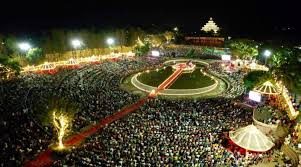
The Paddal Ground: After the rituals, the deities congregate at the massive Paddal Ground. For the next week, this field becomes a sacred space where thousands of people seek blessings directly from the Gurs (shamans) of the various deities.
4. Cultural Extravaganza: Nights at Mandi 2026
The “International” tag of the fair comes from the massive cultural programs organized by the Himachal government.
-
Folk Performances: Evenings in Mandi are filled with the sounds of Himachali Nati (folk dance). In 2026, the fair is expected to host international folk troupes, creating a beautiful exchange of global heritage.
-
The Local Market: The fair is also a massive trade hub. Villagers from high altitudes bring authentic Pashmina shawls, herbal medicines, dried fruits, and traditional Himachali handicrafts to sell.
5. Essential Travel Tips for Mandi 2026
-
How to Reach: Mandi is well-connected by road. The nearest airport is Bhuntar (Kullu), about 60 km away. You can also take a scenic Volvo bus ride from Chandigarh or Delhi.
-
Dates: While Maha Shivratri is on February 15, the fair continues for seven days. To see the maximum number of deities, plan to stay for the first three days.
-
Photography: This is a dream for cultural photographers. However, always show respect. Some deities have strict rules about who can touch the palanquin or how close you can stand.
-
Weather: February in Mandi is chilly but pleasant. Heavy woolens are necessary for the evenings, especially when the breeze blows off the Beas River.
6. The Spiritual Lesson: Community and Faith
The Mandi Shivratri Fair is a powerful reminder of the Democratization of Divinity. Here, God is not trapped behind a sanctum’s bars. The gods come to the streets; they walk with the people, they “dance” with their devotees, and they “listen” to the grievances of the villagers.
In the digital age of 2026, witnessing this ancient “Gathering of Gods” is a grounding experience. It teaches us that faith is not just a private prayer, but a communal celebration of heritage, nature, and the unseen forces that guard the mountains.