Varanasi, the city as old as time itself, does not just celebrate Maha Shivratri; it inhabits it. In the narrow, winding alleys of Kashi, where the scent of incense meets the salt of the Ganges, the air on Sunday, February 15, 2026, will be thick with a madness that is purely divine. While the world observes the “Great Night of Shiva” through fasting and meditation, Kashi celebrates the most eccentric, chaotic, and beautiful event in the cosmos: the Shiva Vivah (The Wedding of Shiva).
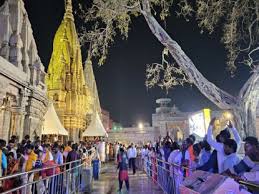
At the heart of this celebration is the Kashi Vishwanath Temple, the reigning seat of the universe’s Lord. But unlike any ordinary royal wedding, Shiva’s bridal party—his Baraat—is a spectacle of the macabre and the magnificent. It is a night where the boundaries between the living and the dead, the beautiful and the grotesque, simply vanish.
1. The Legend of the Ultimate Union
According to the Puranas, Maha Shivratri marks the day Lord Shiva broke his deep, eons-long meditation to marry Goddess Parvati. This union was not just a romantic merger but a cosmic necessity—the balancing of Purusha (consciousness) and Prakriti (nature).
In Kashi, this isn’t just a story told by priests; it is a lived reality. The city considers itself the “Sasural” (in-laws’ home) and the “Maika” (birthplace) of the divine couple simultaneously. To witness the Shiva Vivah here is to witness the soul of India’s spiritual capital.
2. The Bizarre Baraat: Ghosts, Ghouls, and Gods
The most famous aspect of the Kashi Vishwanath celebration is the Shiv Baraat. Mythologically, Shiva is the Pashupatinath (Lord of all creatures) and Bhootnath (Lord of ghosts). When he went to marry the regal Parvati, he didn’t bring a traditional army; he brought his followers—the outcasts of society.
-
The Participants: In the 2026 procession, you will see thousands of devotees smeared in Bhasma (sacred ash). Many dress as Pretas (ghosts), Pisachas (flesh-eaters), and Dakinis. They wear masks of skeletons, carry tridents, and drape themselves in tiger skins.
-
The Atmosphere: The procession is a sensory explosion. The deafening sound of Damrus (pellet drums), the blowing of conch shells, and the high-octane chants of “Har Har Mahadev” create a vibration that can be felt in one’s bones.
-
The Message: This “Ghoulish Wedding Party” carries a deep Vedantic message: Lord Shiva accepts everyone. In his eyes, the “ugly” ghost is as sacred as the “beautiful” deva. He is the God of the marginalized, the wild, and the untamed.
3. Rituals at Kashi Vishwanath: The Wedding Night
As the Baraat reaches the temple, the rituals transition from chaotic celebration to profound Vedic ceremony.
A. The Vivah Sanskar
The priests at Kashi Vishwanath perform the wedding rituals of Shiva and Parvati with the same detail as a human wedding. The idols are adorned in royal finery. In 2026, the Nishita Kaal (midnight window) is when the “Lagna” (auspicious moment) is celebrated.
B. Maha Abhisheka
While the wedding happens, the Jyotirlinga is bathed in milk, honey, sandalwood, and Ganges water. Devotees wait in queues for miles, fueled by nothing but faith and the energy of the night, just to catch a glimpse of the “Dulha” (Groom) in his lingam form.
4. The Transition: From the Smashan to the Shadi
Varanasi is unique because it houses both the Manikarnika Ghat (the great cremation ground) and the Kashi Vishwanath Temple. On Maha Shivratri, these two worlds merge.
-
Masane ki Holi: Just days after Shivratri, Kashi celebrates “Holi with Ash” at the cremation grounds. The wedding of Shiva is the precursor to this—it is a celebration that acknowledges that death is a part of life’s eternal dance.
5. Experiencing Kashi in 2026: A Visitor’s Guide
If you are planning to join the bridal party on February 15, 2026, preparation is key:
-
The Route: The Baraat usually starts from the Mahamritunjaya Temple or the Tilbhandeshwar Temple and winds its way through the “Galis” (alleys) toward Vishwanath Gali.
-
Photography: It is a photographer’s dream, but respect the devotees. The energy is high, and the crowds are dense. Carry minimal gear.
-
The Food: Don’t miss the Thandai—a traditional milk drink infused with saffron, almonds, and sometimes Bhang (as it is the “Prasad” of Shiva).
-
The Corridor: Since the inauguration of the Kashi Vishwanath Dham Corridor, the flow of pilgrims has become more organized, allowing you to see the river and the temple in one seamless architectural experience.
Conclusion: The Night of Dissolution
The Shiva Vivah in Kashi is a reminder that the divine is found not just in the silent meditation of a cave, but in the roaring, dancing, ash-smeared streets of life. It teaches us that to find Shiva, one must be willing to embrace the “ghosts” within themselves—our fears, our shadows, and our wilder instincts.
When you stand in the crowd in 2026, covered in the dust of Varanasi and the echoes of the Damru, you realize you aren’t just a spectator. You are part of the bridal party. You are part of the infinite dance of the Mahadev.