

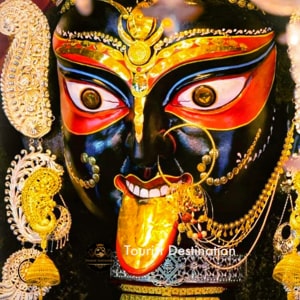
Naihati Kali Puja, one of West Bengal’s most revered and celebrated religious festivals, revolves around the majestic worship of Boro Maa, the grand manifestation of Goddess Kali whose idol commands deep reverence throughout the region. This century-old festival, located in the town of Naihati in the North 24 Parganas district, attracts thousands of devotees from across India and neighboring countries, particularly Assam, Meghalaya, and Bangladesh, each year during the auspicious month of Kartik (October-November).
Historical Origins and the Divine Vision
The genesis of Naihati’s Boro Maa Kali Puja dates back to 1923, when a young man named Bhavesh Chakraborty returned from Nabadwip, deeply inspired by the grandeur of the idols there. Following a divine dream featuring the goddess herself, he was compelled to establish a towering 22-foot-high idol of Goddess Kali to serve as a spiritual beacon for the town.
Boro Maa is worshiped as the fierce Raksha Kali or Shamshan Kali, symbolic of destruction and renewal, in accordance with traditional scriptures such as the Devi Bhagavata Purana and Kalika Purana. The temple complex has grown significantly in both size and devotion over the past century, firmly establishing the festival as a landmark event in Bengal’s religious calendar.
Festival Rituals and Celebrations
Naihati’s Kali Puja spans five intensive days, reflecting the traditions first established by Bhavesh Chakraborty and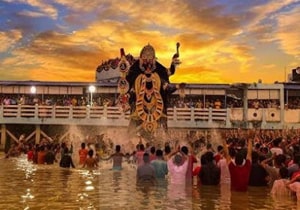 his family. Following his wishes, the organizing committee collects no mandatory contributions from locals; instead, the festival relies on generous voluntary donations and community philanthropy.
-
The goddess is adorned with intricate decorations involving 100 kilograms of gold and 200 kilograms of silver, including a gold face, crown, anklets, and sandalwood ornaments.
-
Ritual offerings, including bhog prepared with desi ghee, are distributed daily to devotees and the needy, prepared by Chakraborty family successors ensuring continuity.
-
The festival includes the practice of ‘dandi kata’, a ritual form of self-discipline and devotion, performed by devotees seeking blessings.
-
Sarees and other offerings left during the puja are distributed thoughtfully among orphanages, elderly homes, and poor unmarried girls, exemplifying the community’s spirit of care and inclusion.
During visharjan (immersion), the idol, beautifully dressed in its “raj besh” with elaborate floral garlands, is paraded solemnly to the nearby Ganges river. Thousands join the procession, which is carefully regulated by local police to ensure safety. The committee’s innovative step to live-stream the immersion on social media has allowed devotees far from Naihati to participate virtually, expanding the festival’s reach.
Spiritual and Cultural Significance
Boro Maa symbolizes more than dazzling ritual; she represents the fierce yet benevolent power protecting and nurturing her devotees. The legend of her origin and continuous worship in Naihati reflect Bengal’s deep-rooted Shakta traditions blended with local community ethos.
The Kali Puja festival here is a vibrant combination of spiritual fervor, cultural unity, artistic excellence, and profound social responsibility, making it one of the region’s most poignant religious celebrations.
Why Visit Naihati Kali Puja?
-
Experience one of West Bengal’s tallest and most opulent Kali idols.
-
Witness traditional rituals combined with community-driven philanthropy.
-
Enjoy a festival atmosphere filled with devotion, music, and heartfelt offerings.
-
Engage with a centuries-old cultural tradition that reflects Bengal’s spiritual heritage.
For more information, detailed schedules, and authentic festival guides about Naihati Boro Maa Kali Puja and other celebrated festivals in West Bengal, visit https://www.pujo2pujo.com/.


