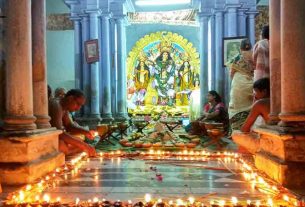
As the winter frost begins to melt under the gentle gaze of the northern sun, a vibrant hue of yellow starts to blanket the Indian subcontinent. This is the herald of Vasant Panchami, a festival that marks the arrival of Vasant Ritu (Spring), the “King of Seasons.” In 2026, this auspicious day falls on Friday, January 23rd, coinciding beautifully with the birth anniversary of Netaji Subhas Chandra Bose, making it a day of dual celebration for many.
Vasant Panchami is more than just a date on the Hindu calendar; it is a spiritual, cultural, and seasonal phenomenon. It is the day we worship Goddess Saraswati, the deity of knowledge, music, arts, and speech. From the mustard fields of Punjab to the quiet libraries of Bengal and the temples of South India, the festival serves as a reminder that life, much like nature, is in a constant state of renewal and learning.
1. The Spiritual Essence: Why We Worship Maa Saraswati
Mythology tells us that Lord Brahma, after creating the universe, felt that his creation lacked soul and vibration. To remedy this, he sprinkled water from his Kamandalu, and a beautiful goddess emerged from the ether. She was clad in white, carrying a Veena, a book, and a rosary. As she played the Veena, the world was filled with sound, rhythm, and language.
This goddess was Saraswati. Therefore, Vasant Panchami is celebrated as her birthday. Worshipping her on this day is believed to sharpen the intellect, refine creative skills, and bring clarity to one’s speech. In 2026, as we navigate an increasingly digital and noisy world, the quest for Vidya (true knowledge) as represented by Saraswati has never been more relevant.
2. The Significance of Yellow: The Color of Life
If Vasant Panchami had a signature, it would be the color Yellow. Known as Basanti, this color symbolizes:
-
The Harvest: The ripening of mustard crops (Sarson) which creates a “Golden Sea” across rural India.
-
Energy: The warmth of the sun as it moves toward the northern hemisphere (Uttarayan).
-
Intellect: In psychological terms, yellow stimulates the mind and fosters optimism.
On January 23, 2026, millions will wake up and don yellow sarees, turbans, and kurtas. Houses will be decorated with yellow marigolds, and the air will be thick with the aroma of saffron-infused Meethe Chawal (Sweet Rice) and Basanti Pulao.
3. Regional Celebrations: One Festival, Many Flavors
North India: Kites and Mustard Fields
In Punjab, Haryana, and Rajasthan, the focus is on the sky. The festival is celebrated with fierce kite-flying competitions. The “Patang” symbolizes the human spirit soaring high. Families gather on rooftops, playing loud music and enjoying Sarson da Saag and Makki di Roti.
East India: The Scholar’s Tribute
In West Bengal, Bihar, and Odisha, the day is synonymous with Saraswati Puja. Schools and colleges become the epicenter of festivities. A unique ritual called Hate Khori is performed, where toddlers are introduced to writing for the first time. It is also jokingly referred to as “Bengali Valentine’s Day,” as young couples in traditional attire throng the streets of Kolkata.
South India: Aksharabhyasam
In states like Telangana, Andhra Pradesh, and Karnataka, the day is dedicated to Vidya Arambham. Parents take their children to temples (like the famous Gnana Saraswati Temple in Basara) to initiate their formal education.
4. Vasant Panchami 2026: Rituals to Follow at Home
If you are planning to celebrate the festival at home this year, here is a simple guide to the rituals:
-
Purification: Clean your house and take a bath with water containing turmeric or neem leaves.
-
Saraswati Sthapana: Place an idol or photo of the Goddess in the Northeast corner.
-
The Offering of Books: Students should place their books, pens, and musical instruments near the idol. This signifies that we dedicate our tools of learning to the Divine.
-
The Yellow Bhog: Prepare and offer yellow-colored food items like Boondi Laddoo, Rajbhog, or Kesari Bhaat.
-
Chanting: Recite the Saraswati Vandana:
“Ya Kundendu Tushara Hara Dhavala…” (May the Goddess who is as fair as the moon protect us.)
5. The Educational Significance: A Fresh Start for Students
Vasant Panchami is considered an Abujha Muhurat—a day so auspicious that you don’t need to check a priest for a specific time to start something new. For students preparing for the competitive exams of 2026 (like JEE, NEET, or UPSC), this day is an excellent opportunity to reset their study schedules and seek mental focus.
The festival teaches us that learning is not just about passing exams; it is about the “unfolding of the soul.” By honoring the Goddess of Arts, we acknowledge that a balanced life requires both scientific logic and creative expression.
6. Sustainability in 2026: An Eco-Friendly Vasant Panchami
As we celebrate in 2026, there is a growing consciousness regarding the environment.
-
Eco-Idols: Many are opting for clay idols that dissolve easily in water without polluting rivers.
-
Natural Colors: Using organic turmeric for Tilak and decorations instead of synthetic dyes.
-
Save the Birds: In Northern India, people are being urged to use cotton threads for kite flying instead of the harmful glass-coated Manjha.
Conclusion: Embracing the Light
Vasant Panchami 2026 is a bridge between the introspection of winter and the productivity of spring. It is a day to let go of the “darkness of ignorance” (Tamas) and move toward the “light of knowledge” (Jyoti). Whether you are flying a kite in the blue skies of Punjab or offering a flower to a book in a quiet corner of your home, the spirit remains the same: a celebration of the human intellect and the beauty of nature.
May the golden glow of Vasant Panchami bring prosperity, wisdom, and a renewed sense of purpose to your life!