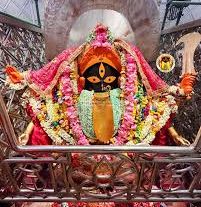
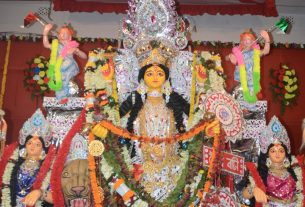
In the heart of North Kolkata, where the majestic Doric columns of the Sovabazar Rajbari stand as silent witnesses to three centuries of history, a spring breeze carries a familiar, sacred scent. While the entire world knows this mansion for the autumn Durga Puja started by Raja Nabakrishna Deb in 1757, it is the Basanti Puja (the Spring Durga Puja) that truly captures the refined, aristocratic soul of the “City of Joy.”
As we prepare for March 2026, the Thakur Dalan (altar courtyard) of the Royal House of Sovabazar is once again being prepared for the Goddess. For heritage enthusiasts, spiritual seekers, and history buffs, witnessing the Basanti and Annapurna Puja 2026 at the Sovabazar Rajbari is a rare opportunity to see the “Original Durga Puja” in its most regal and authentic setting.
1. The Legacy: The House of Raja Nabakrishna Deb
The Sovabazar Rajbari is not just a building; it is a monument to the cultural synthesis of Bengal. After the Battle of Plassey, Raja Nabakrishna Deb hosted the first grand Durga Puja in the autumn of 1757. However, the family has meticulously maintained the tradition of Basanti Puja, which according to the Puranas, is the “timed” worship of the Goddess established by King Suratha long before Lord Rama’s Akal Bodhan.
-
The Architecture of Power: The Rajbari’s courtyard, with its high ceilings and arched gateways, was designed to host the elite of the British Raj and the Bengali intelligentsia. During Basanti Puja, this space transforms into a sanctuary of Vedic chants and traditional Bengali music.
-
The Unchanged Idol: The Sovabazar family follows the “Ek-chala” style, where all the deities (Durga, Lakshmi, Saraswati, Kartik, and Ganesh) are placed under a single, semi-circular backdrop, maintaining the 18th-century aesthetic.
2. Annapurna Puja 2026: The Queen of Abundance
Within the week of Basanti Puja lies the highly significant Annapurna Puja. In 2026, this falls on Friday, March 27th (Maha Ashtami).
-
The Divine Hostess: Goddess Annapurna is the manifestation of Parvati who feeds the world. At the Sovabazar Royal House, she is worshipped with a silver ladle and a golden bowl, symbolizing that the doors of the Rajbari are always open to the hungry and the seeker.
-
The Ritual of Annakoot: A “mountain of rice” and dozens of traditional Bengali vegetarian dishes are offered to the Goddess. This Bhog is later distributed among devotees, a practice that has continued uninterrupted for generations.
3. What to Expect at Sovabazar Rajbari in March 2026
The “Bonedi” Grandeur
The term “Bonedi” refers to the old-world aristocracy of Bengal. At Sovabazar, this translates to a specific elegance: the priests wear traditional silk, the family members gather in their ancestral finery, and the rituals are performed without the use of microphones or modern “theme” distractions.
The Sandhi Puja Echoes
The most potent moment of the festival is the Sandhi Puja—the 48-minute window where Ashtami ends and Navami begins. In the enclosed courtyard of the Rajbari, the sound of 108 lamps being lit and the synchronized beating of the Dhak (drums) creates an acoustic vibration that many describe as a “trance-like” experience.