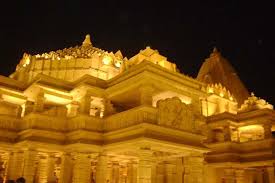
In the quiet district of Hooghly, West Bengal, lies a town that transforms into a sea of saffron and devotion every year. Tarakeswar, home to the ancient Taraknath Temple, is the beating heart of Shaivism in Bengal. As Maha Shivratri dawns on Sunday, February 15, 2026, the air will be thick with the scent of incense, the sound of rhythmic chants, and the splash of holy water from the Ganges.
For the people of Bengal, Tarakeswar is not just a temple; it is a place of surrender. Whether it is the legendary Gajan pilgrims or the barefoot devotees carrying water across miles, the journey to “Baba Taraknath” is a visceral display of faith that has remained unchanged for nearly 300 years.
1. The Legend of the Cow and the Hidden Lord
Built in 1729 by Raja Bharamalla, the Tarakeswar temple has a foundation story rooted in divine mystery. Legend tells of Vishnu Das, a devotee from Ayodhya who moved to Hooghly but was met with suspicion by the locals. His brother noticed a curious phenomenon: every day, their cows would gather at a specific spot in the forest and release their milk into the soil.
Upon digging at the site, they discovered a Swayambhu (self-manifested) Shiva Lingam. In a dream, Lord Shiva revealed himself as Baba Taraknath—the Savior. Today, the temple’s Atchala (eight-roofed) architecture stands as a testament to that discovery, drawing millions who believe that Taraknath is the supreme protector of the region.
2. The Jal-Yatra: A Test of Endurance
The most defining ritual of Tarakeswar is the Jal-dhala (pouring of water). While regular visitors pour water daily, Maha Shivratri 2026 will witness a massive human chain of devotion.
-
The Source: Devotees first travel to Sheoraphuli, a town on the banks of the Hooghly (Ganges) River, nearly 38 kilometers away.
-
The Trek: They collect the holy Ganges water in earthen pots tied to bamboo poles (Bahangi). Dressed in saffron, thousands of men, women, and children trek barefoot all night, chanting “Bhole Baba Paar Karega” and “Jai Baba Taraknath.”
-
The Offering: Upon reaching the temple, they wait in grueling queues to pour the water onto the Lingam, believing this simple act of cooling the deity washes away a lifetime of sins.
3. The Gajan Pilgrims: Faith Beyond Pain
During the Gajan festival (which often coincides with spring rituals but peaks on Shivratri), you will witness the Sannyasis or Gajan pilgrims. These are devotees who undergo extreme penance to please Baba Taraknath.
-
The Rituals: You might see devotees performing Dandi—traversing the entire distance to the temple by measuring the ground with their bodies (prostrations).
-
Self-Penance: Some Gajan pilgrims engage in awe-inspiring (and often shocking) acts of devotion, such as walking on hot coals or lying on beds of nails, symbolizing the triumph of the spirit over physical pain.
4. Dudhpukur: The Tank of Miracles
To the north of the temple lies Dudhpukur, a sacred water tank.
-
Healing Waters: It is believed that the water in this tank has medicinal properties. Most pilgrims take a mandatory dip in Dudhpukur before entering the main shrine.
-
The Vow: Many devotees perform a ritual called Dhil-bandha, where they tie a piece of clay or stone to a nearby tree with a vow. Once their wish is fulfilled, they return to Tarakeswar to untie it as an act of gratitude.
5. Travel Guide for Tarakeswar 2026
If you are planning to join the millions on February 15, 2026, here is how to navigate the surge:
-
Transport: The easiest way is the Tarakeswar Local train from Howrah Station. The journey takes about 90 minutes. In 2026, special “Mela Trains” will run through the night to accommodate the Shivratri rush.
-
The Crowd: On Maha Shivratri, the temple is packed. Expect wait times of 5 to 8 hours. If you are a first-time visitor, try to arrive in the early morning hours of Sunday.
-
Food: Try the local Tarakeswari Sandesh and other Bengali sweets. The temple also provides Bhog (sacred meal) at noon, though you must secure a coupon early.
-
Nearby Attractions: Visit the nearby Rajbari (Royal Palace) ruins and the small shrines of Lakshmi-Narayan and Kali that surround the main complex.
Conclusion: The Pulse of Bengal’s Devotion
Tarakeswar is not just about a temple; it is about the energy of the masses. On Maha Shivratri 2026, when the midnight “Mahadipa” is lit and the bells echo through the Hooghly plains, you realize that for the people here, Baba Taraknath is a living presence. The journey from the Ganges to the temple is a metaphor for life—a long, difficult trek made easy by the name of the Divine.
Whether you are a pilgrim carrying water or a traveler witnessing the spectacle, the saffron wave of Tarakeswar will leave an indelible mark on your soul.