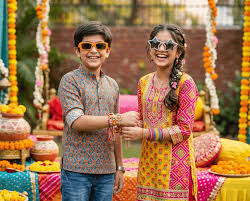
As the full moon of the auspicious Hindu month of Shravana rises over the horizon, millions of households across India and the global diaspora light up with laughter, vibrant colors, and sweet aromas. This is Raksha Bandhan (popularly known as Rakhi), an ancient festival celebrating the sacred bond between brothers and sisters.
On Friday, August 28, 2026, families will gather to perform the timeless ritual of tying a sacred thread (Rakhi) around a brother’s wrist—a gesture where a sister prays for her brother’s long life and prosperity, and he, in turn, pledges his unconditional love and protection.
Whether you are preparing for family gatherings, seeking the ideal gift, or looking to understand the deep mythological roots of this tradition, this complete guide covers the history, sacred timings (Shubh Muhurat), rituals, and gifting ideas for Raksha Bandhan 2026.
1. The Meaning & Philosophy of Raksha Bandhan
The phrase Raksha Bandhan literally translates from Sanskrit to “The Bond of Protection.”
While modern celebrations focus heavily on the loving dynamic between siblings, the core philosophy of the festival goes deeper:
-
The Sacred Thread (Rakhi): It is not merely a piece of decorative cotton or silk. It acts as an amulet (Raksha Sutra) imbued with protective energies, driving away negative influences and invoking spiritual wellbeing.
-
Mutual Protection: Historically and spiritually, the obligation of protection is mutual. While the brother promises physical and emotional support, the sister’s earnest prayers and sacred thread act as a spiritual shield for the brother.
-
Universal Brotherhood: In many regions, the festival transcends biological ties. People tie Rakhis onto close friends, neighbors, soldiers protecting national borders, and even spiritual teachers to forge bonds of divine kinship.
2. Historical Legends: Stories Behind the Thread
Raksha Bandhan is anchored in several gripping narratives from Indian history and Hindu scriptures.
Draupadi & Lord Krishna ➔ Tied cloth on Krishna’s finger ➔ Vowed divine protection (Saree Chirharan)
Empress Karnavati & Emperor Humayun ➔ Sent Rakhi for alliance ➔ Emperor rode to defend Chittor
Goddess Lakshmi & King Bali ➔ Tied thread on Bali ➔ Freed Lord Vishnu from the underworld
1. Lord Krishna and Draupadi
The most famous legend comes from the Mahabharata. When Lord Krishna accidentally cut his finger on his Sudarshana Chakra, Draupadi immediately tore a strip of cloth from her silk saree and tied it around his bleeding wrist. Touched by her loving action, Krishna promised to protect her whenever she was in dire need—a vow he fulfilled during her darkest hour in the royal court of Hastinapur.
2. Rani Karnavati and Emperor Humayun
In medieval history, when Rani Karnavati, the widowed queen of Chittor, faced an imminent invasion by Bahadur Shah of Gujarat, she sent a sacred Rakhi to the Mughal Emperor Humayun seeking help. Touched by the gesture, Humayun immediately diverted his armies toward Chittor to protect her, cementing a historical example of cross-cultural unity.
3. Key Rituals: How Raksha Bandhan is Celebrated
The day begins early with family members dressing in traditional ethnic attire—vibrant sarees, Anarkalis, and 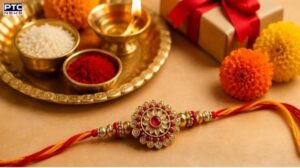 Kurtas.
The Step-by-Step Rakhi Ritual:
-
Preparing the Pooja Thali: The sister prepares a decorated plate containing a lit lamp (Diya), sacred vermilion powder (Roli/Kumkum), rice grains (Akshat), sweets (Mithai), and the chosen Rakhi.
-
Applying the Tika: The brother sits facing east or north. The sister applies a mark of Kumkum and rice grains onto his forehead, invoking spiritual clarity and divine blessing.
-
The Aarti: She performs a gentle circular Aarti with the lit lamp to remove negative energy.
-
Tying the Rakhi: The sister ties the sacred thread around her brother’s right wrist while chanting protection mantras.
-
Sweetening the Bond: She feeds him a piece of sweet (such as Kaju Katli, Laddoo, or Gulab Jamun), and he feeds her in return.
-
Exchanging Promises & Gifts: The brother offers a gift—ranging from cash tokens and jewelry to modern gadgets—and touches her feet or hugs her as a vow of lifelong support.
4. Important Timings (Shubh Muhurat) for August 28, 2026
In Hindu traditions, tying the Rakhi during an auspicious time window (Shubh Muhurat) is critical, and performing the ritual during the Bhadra period is traditionally avoided.
5. Thoughtful Gifting Ideas for Raksha Bandhan 2026
Exchanging gifts is a highlight of the day. Modern trends blend classic sentiments with practical lifestyle choices.
For Sisters:
-
Personalized Jewelry: Engraved silver pendants, birthstone rings, or customized name bracelets.
-
Experience & Wellness Vouchers: Spa packages, concert tickets, or weekend getaway bookings.
-
Tech & Wearables: Smartwatches, noise-canceling earbuds, or e-readers.
For Brothers:
-
Eco-Friendly Rakhis: Plantable seed-Rakhis embedded with tulsi, marigold, or vegetable seeds that can be planted in soil after the festival.
-
Grooming Kits & Fragrances: Premium skincare hampers or classic colognes.
-
Customized Keepsakes: Engraved leather wallets, custom wooden desk accessories, or customized photo albums.
6. Celebrating Across Distances: Digital Raksha Bandhan
If distance separates you from your sibling on August 28, 2026, technology makes it easier than ever to bridge the gap:
-
Online Rakhi Deliveries: Order eco-friendly or silver Rakhis along with gourmet sweet boxes shipped directly to your sibling’s doorstep anywhere in the world.
-
Virtual Pooja Gathering: Set up a video call during the auspicious Muhurat, play traditional music in the background, and perform a synchronized virtual celebration.
Conclusion: A Celebration that Outlasts Time
Raksha Bandhan 2026 is far more than a routine exchange of threads and gift boxes; it is a profound celebration of unconditional love, memory, and shared history. As sisters tie the thread of protection on August 28, 2026, they carry forward a unbroken thread of human connection that unites families across miles and generations.