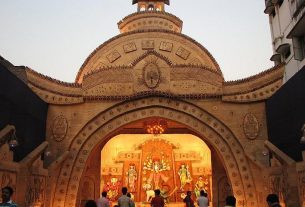
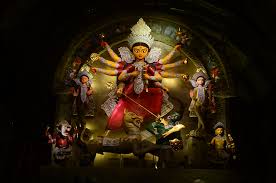
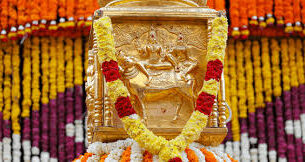
Thanthania Kali Bari, nestled at the intersection of Bidhan Sarani and College Street (Machuabazar area), is one of Kolkata’s oldest and most evocative Kali temples, where Maa Siddheshwari— a fierce yet fulfilling form of Goddess Kali—is worshipped with profound intimacy and timeless rituals. This historic site exudes old-world charm through its modest architecture, clay idol renewed annually, and unhurried devotional rhythm, offering a serene contrast to the city’s grand pandals.
A Legacy Forged in Faith and Forest
Established around 1703 by Tantric practitioner Uday Narayan Brahmachari on a former shamshana (cremation 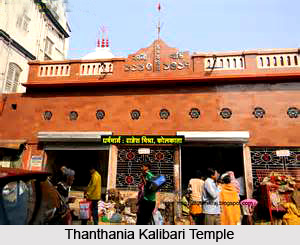 ground) amid dense forests, the temple began as a simple mud-walled structure with a palm-leaf roof, housing a clay idol molded by Brahmachari himself. The name “Thanthania” derives from the rhythmic “than-than” sounds of tantric rituals audible to passersby. In 1806, businessman Shankar Ghosh rebuilt it into its present form, adding an ath-chala Pushpeswar Shiva temple; his descendants continue as sevayets (priests), preserving the lineage. The Ghosh family’s grandson, Swami Subhodhananda, a direct disciple of Sri Ramakrishna, further sanctified the site. Inscriptions confirm dates from 1703–1806, affirming its 300+ year antiquity.
The Living Idol and Sacred Rites
At the heart is Maa Siddheshwari’s clay murti, repainted yearly in striking red and black, symbolizing Kali’s transformative power—destroyer of ego, granter of siddhis (spiritual accomplishments). Unlike stone idols, it is immersed annually, replaced by a fresh one, embodying renewal. Daily worship unfolds in the traditional Bengali atchala style: morning mangal aarti awakens the goddess, followed by offerings of flowers, sweets, and fruits; evenings bring sandhya aarti with bells, conches, and kirtans that echo the temple’s mystical origins. Tuesdays and Saturdays draw special crowds for Tantric pujas, while Kali Puja, Kaushiki Amavasya, and Phalaharini Amavasya see heightened fervor with bhog of rice, radish, and jaggery. The adjacent Shiva shrine completes the Shakta-Shaiva harmony.
Old-World Charm Amid Urban Pulse
Thanthania’s appeal lies in its unpretentious intimacy: wooden beams support the roof, narrow stairs lead to the sanctum, and the courtyard invites quiet meditation. No flashy lights or crowds overwhelm the space; instead, devotees experience personal darshan, the scent of incense, and chants that transport visitors to 18th-century Kolkata. Its location near College Street—hub of intellectual life—adds layers, as Ramakrishna himself visited nearby during his youth. The temple remains a haven for tantrics, scholars, and locals seeking solace.
Visiting Thanthania Kali Bari
Open daily (6 AM–1 PM, 4 PM–8 PM), reach via Girish Park or Sovabazar-Sutanuti Metro; it’s a short walk from bustling markets. Offer hibiscus, coconuts, or sweets; Tuesdays/Saturdays are auspicious. Photography is restricted during aarti—embrace the stillness